
In our last blog, we looked at the philosophical implications of AI, and concluded that if an All Knowing Intelligence (“AKI”) emerges, it may be able to predict the future with great accuracy, or at least much better accuracy than we humans can. And we played around with the slightly trippy idea that for such an entity both the past and the future may become equally deterministic, so it would likely have a very different concept of time compared to us mere humans.
I admit, that was quite abstract, so today, let’s think about something a bit more practical, and close to home. Will an AI take my job?
Given that this is a big and complicated question, let’s start with picking the low hanging fruit in terms of answers.
One, AI will definitely change your job, and as anybody reading this knows, it has already.
It is then tempting to jump to the seemingly related and very well trodden truism that AI will not take your job, but somebody using AI better than you will. While this sounds funny and catchy, I sadly have some bad news – AI may in fact take your job. Querying answers to your bosses questions in ChatGPT is not keeping you safe. Sorry to be the bearer or bad news there.
Then again, the idea that there was somebody out there using AI better than us already was very likely scary to begin with, so perhaps this added revelation hurts a bit less.
But what is one to do? How do we keep our jobs and livelihoods safe?
Well, here is one thought. As a good friend of mine used to say, “be so good they cannot ignore you”.
A mental model that I have of the best AI in the market currently, is that it is like having access to a B+ level professor in any given subject.
You want to understand behavioural finance and the works of Thaler, Kahneman and Tversky? Ask Grok or Gemini and they will give you answers in any format you like. You are interested in mid 13th century mystic philosophy in Asia Minor? Or how the Roman Empire went from being a republic to a dictatorship? Or theoretical physics and quantum theory? That B+ level professor is there for you, around the clock, anytime you wish.
And mind you, the B+ categorization doesn’t refer to the quality of the answers per se. It means that the answer you are getting are of the quality you would get from a person that studied this subject, wrote a Ph.D. thesis on it, and went on to become an expert in that very subject, no matter which subject your question was about.
Which begs the question, what does it not get you? Why not A+ level answers? When does AI’s limits show up?
Well, if you are an expert in your field, and you are facing very specific and cutting edge questions, AI may not be able to give you the full answer. At least not yet. For the most difficult and cutting edge questions (as well as new discoveries) around theoretical physics, someone like a David Deutsch will still not be easy to replace with an AI. And think about the best fintechs out there – AI helps, but founders drive it.
So, what’s the conclusion here? Whatever you do, try to be the very best at what you do. As the Marvel character Wolverine famously said, “I am the best there is at what I do, but what I do isn’t very nice”.
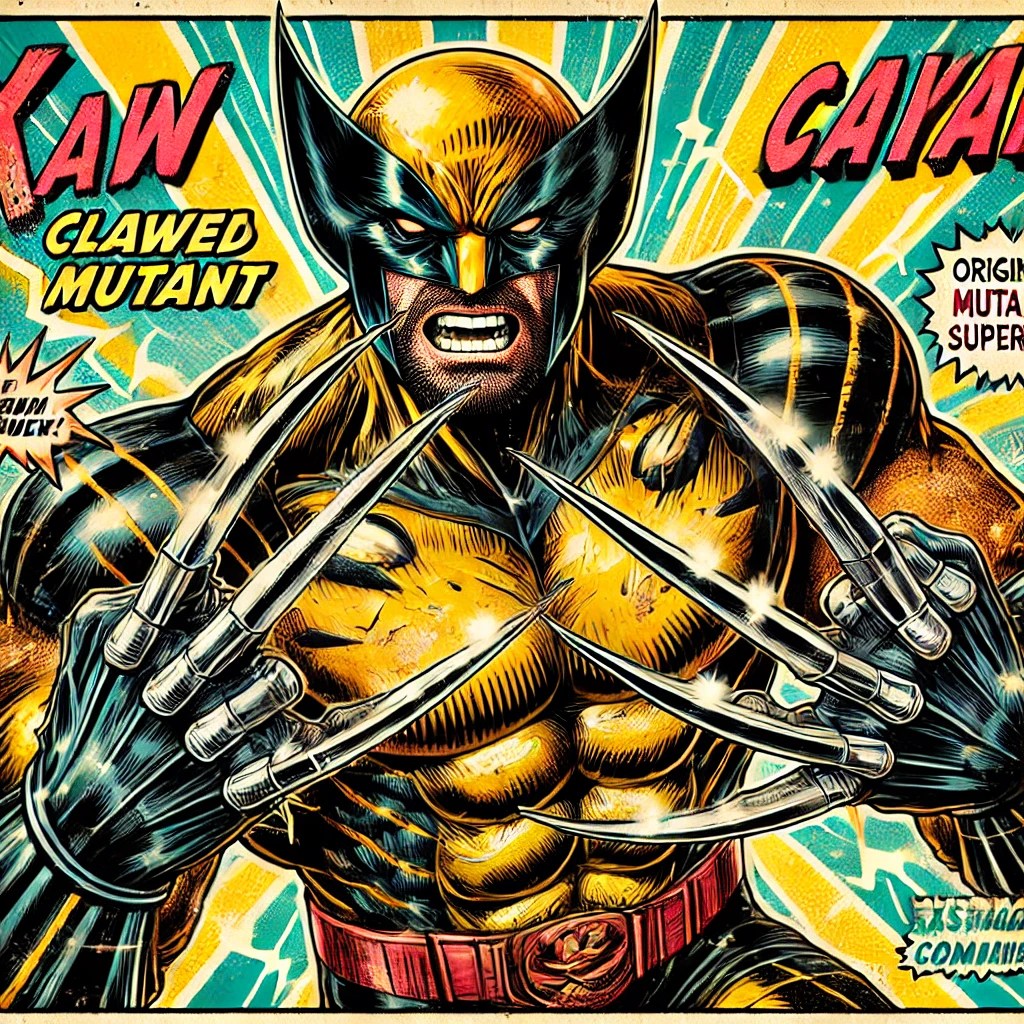
Perhaps the corollary in this case is to be the best there is at what you do, but what you do may have to be razor sharp.
Oh, and if you just blindly copy and paste comments from ChatGPT into your work e-mails and memos, AI will eventually take your job. Find your edge over AI – you know you have it in you!
 Yusuf's blog