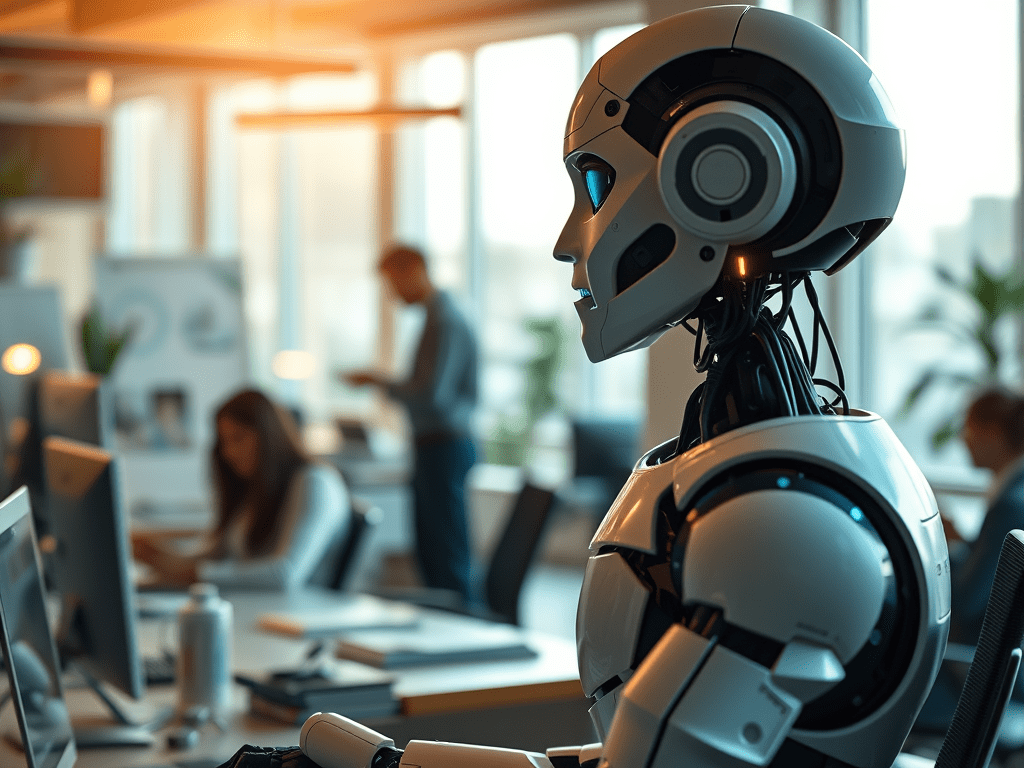
Europe’s AI Edge May Be in Stockholm

The most recent stop in our QED tour of European fintech ecosystems was Sweden, where we used the occasion of Stockholm Fintech Week to meet some of the best founders in Europe.

We are by no means strangers to Sweden: Apart from having been born there myself, Nigel Morris also served on the board of Klarna in the early days, helping them with everything from credit underwriting to international expansion during those formative years.

So consider this “top five” take the latest installment in a Nordic saga that has been close to our hearts for more than a decade.

Impression #1: Sweden goes for the European AI crown

The cutting edge of innovation is very much happening in Sweden.

From Lovable to Legora, just to name two recent examples, Swedish AI is breaking out and the next generation of companies are getting funded with big tickets. It was also quite remarkable how plugged in the latest generation of founders were to the US and the rest of the world.

What seems to really differentiate Sweden in the AI context today is the focus on practical application layers, the amount of funding coming in from the US, the sheer number of AI start-ups per capita, and the recent success stories that are fueling the virtuous cycle.

There is also a lot of thought around globally focused vertical AI solutions, that bundle AI with a regulated layer, thus creating moats in a field that has the risk of being commoditized or overtaken by the big foundational companies. This shows that Swedish founders are very much at the forefront of how to build defensively in the age of AI.

This was indeed probably the most interesting pattern we saw: the best founders are not building horizontal AI, they are embedding AI into regulated verticals, creating defensibility where others risk commoditization.

Based on the founders we met this week, the best is yet to come, and just like Spotify came to dominate music streaming, we strongly feel Sweden will continue to produce global winners in AI.

Impression #2: Founders are thinking big and global, and the world is noticing

There is no shortage of global fintechs that have come out from Sweden, and Klarna, Zettle, Trustly, and Tink are just a few recent examples, not to mention Spotify and Skype from prior decades. Early employees and new entrepreneurs are quickly spinning out of these and other household names, and global funds from the US and Europe are flocking to Stockholm to back them.

As a result, a lot of founders are getting funding with very big rounds while still in stealth mode, and these newly funded founders are certainly thinking big. In other words, the winners and household names of tomorrow are being funded now as we speak.

Another very important factor here is that the relatively small global market of Sweden forces founders to think internationally pretty much from Day 1.

Impression #3: The ecosystem is small, but very concentrated

As we learn in microeconomics, a concentrated but large benefit tends to win over an equal but distributed cost. This power of concentration is very much evident in the Stockholm fintech scene. Compared to a place like London that is much bigger, the fintech (and tech) scene in Sweden feels very tight, very motivated, very focused, and very much ready to take on the world.

There is almost a sense of mission or preordained destiny about many of the founders we met, and from experience we know that this kind of focus is a crucial ingredient for success.

Impression #4: First principle thinking is driving true innovation

As we travel European ecosystems, we see many that are competitive and entrepreneurial. If somebody goes after an idea, others copy it, and build local flavors of globally proven models.

Swedish entrepreneurs however, stand out with more first principle and original thinking, and as a result end up being global trendsetters and innovators compared with many other European countries. A good example of this outside the world of tech is how the safety obsessed culture of Sweden gave us the seat belt which was invented by Volvo employee Nils Bohlin in 1959.

Impression #5: Sweden has become very wealth and entrepreneur friendly

This goes against many people’s stereotype of Sweden, but Sweden has quietly become very wealth friendly over the last couple of decades. Since 2005 there is not inheritance tax, and since 2007 there is not wealth tax. Capital gains tax is effectively flat and can be quite low, and stock options were reformed in 2018.

Add to this the fact that a high safety net drives higher risk taking, along with the deep tech and engineering culture, and it should not come as a surprise that Sweden actually has 2x more billionaires per capita compared to the United States. Twice as many.

So from the days when we sat of the board of Klarna to today, we remain excited about Sweden. Stockholm is now Europe’s most efficient AI factory, and if you are not spending time in Stockholm right now, you are missing where European AI is actually being built.

Who Will Win in AI: Data, Regulation, and Power

AI is continuing to transform our lives, and not a day goes by without a new announcement, a new investment, or a new model being released. But who will be the long term winners in this field?

If we look back to what was the dawn of the e-commerce era in the nineties, a similar pace of investment and innovation was taking place during the internet boom, and the ultimate winners were not easy to predict.

In December 1997 Amazon had a market cap of $800 million, and eBay had not yet gone public. By December 1998 Amazon was up more than 20x at $19 billion, and eBay, fresh off its IPO traded at $11 billion. As another year went by and the millennium drew to a close in 1999, Amazon traded at $270 billion vs $17 billion for eBay.

Then the dot com bubble burst. By December 2003, Amazon was trading at $11bn and eBay had surpassed it (driven by a more profit oriented performance) to $21bn. Roll forward to more than two decades later, as of April 2025, Amazon is now at $2 trillion vs. $32 billion for eBay.

If we look at other big technological innovation, for example smartphones, similar patterns emerge. In 2007, Nokia’s market cap was $117 billion, larger than that of Apple at $112 billion. Today, Apple is at about $3.3 trillion vs. $29 billion for Nokia, and very few people would have heard about the Symbian smartphone Nokia was launching in 2007. Another aspiring smartphone maker, Palm, traded at a peak valuation of $53 billion, but today many people have never seen a Palm Pilot, much less the Treo that Palm launched in 2003 as a smartphone.

So let’s switch back to AI. Who will be the dominant players of tomorrow? Given the above, it may not be easy to predict.

In simple terms, the inputs needed to win are vast amounts of data and power (both computational and electrical) along with distribution channels. This requirement already gives certain existing players a big advantage.

Tech giants such as Alphabet and X have access to vast amounts of proprietary data in the form of all our e-mails and social media content. With these existing user bases, distribution is also easier. Advantage incumbents in this case.

Yes, ChatGPT has a solid first mover advantage, but it will likely have to work harder to overcome the data edge of Gemini and Grok. Is this another eBay vs. Amazon moment?

Furthermore, the sophistication and scale of AI models are escalating rapidly, directly impacting who can compete. Today’s leading models—like OpenAI’s GPT-4o, Google’s Gemini 2.0, or xAI’s Grok 3—boast parameter counts in the hundreds of billions, requiring massive datasets and compute resources to train. For instance, training a model like GPT-3 (175 billion parameters) reportedly took 3.14 × 10²³ FLOPs (floating-point operations), a number that’s ballooned with successors. Again, advantage incumbents.

In the world of fintech, banking giants such as JPMorgan and Capital One also have access to decades worth of proprietary user data. Likewise, they have a distribution advantage, but they will have to fight the “compliance says no” mindset in bringing innovation forward, a story we are familiar with as fintech investors at QED. Advantage incumbents, as long as they don’t drown in their own red tape. Most certainly an exciting opening for aspiring challengers.

All these examples are from the United States, but looking through a geopolitical lens, we see the advantage China also has. In addition to the vast amounts of data generated by its population it is also the biggest solar panel producer globally which gives them an advantage on the power dimension – the marginal cost of solar power is close to zero (as low as $0.01/kWh). China currently produces about 80% of solar panels globally, plenty to power future GPU farms.

Europe, on the other hand, has been a laggard. Using regulation to try to even the playing field will be tempting, so we can expect an amplification of the debate around who owns user data and GDPR. This is an important debate to have, but not at the expense of stifling innovation. And there is strong impetus around European domiciled models, and many exciting startups and scaleups, so expect more in this space. Europe cannot afford to miss the boat on AI.  

This also highlights another incumbent with access to both data and power: national governments and their various branches, including the armed services. As the importance of data and AI becomes clearer, there will be a temptation for many governments to collect and store more data on its citizens, and then use that data to power AI models. To ponder the possible social and political implications of this, the book Nexus by Yuval Noah Harari is a good starting point.

So while it looks like the incumbents look to lead the AI race with data and power, we are VCs and exist on the premise of disruption and the power of innovation. AI creates plenty of opportunity, especially in fintech where regulation is difficult to navigate for many.

The so what for fintech entrepreneurs building in the AI space is this:

First, find your own data edge and grow it and guard it jealously. If your business model gives you proprietary data, this is your doorway into a future AI moat. Use it wisely.

Second, regulation is more cumbersome for giants. Use regulatory arbitrage to your advantage while you can. Be nimble and take calculated risks. You need to understand regulation, yet not be hamstrung by it.

Thirdly, look to niche areas to grow from. Amazon started as a bookseller and became a global e-commerce giant. Fintech presents an interesting wedge for founders, where niche data sets can be sharpened to provide an edge to a targeted user base with domain specific models. Think fraud detection, the HR channel and the future of work, auto finance and insurance, tax and tariff complexities, and many others.

From there, be the best operator out there and out-maneuver your competition, adding one new vertical or market at a time. And QED is here, ready to help with our global reach and understanding of regulatory businesses.

Finally, look for where AI is disrupting incumbents. Regulation slowing down banks, making them laggards in deploying AI may be one example. Another area may be in distribution, and the emergence of voice as a distribution channel. We often say that the smart phone is a very clunky input/output channel with a small screen and small keyboard for our two thumbs. Being able to ditch your screen and talk to your AI, having it summarize your inbox, reply on your behalf etc. may supplement our use of smartphones. More on that in our next blog.

AI and Privacy: It’s Good to be King

In a world where AI may be coming for our jobs, we all need to find our edge – that one thing we do better than anyone else, AI or human. We had explored this topic in our last blog, where we had likened today’s AIs to B+ professors on any given topic, and had concluded that to stay relevant we need to perform at A+ levels in our specific fields.

Today, let’s look at another, but related topic. Do these “B+ professors” keep a copy of the homework we give them? In other words, are these non-human super intelligences keeping our personal data? And if so, is that a good thing or a bad thing?

The facts pertaining to this question are hard to know for two reasons. AI makers tend to dodge transparency, and the policies they do have tend to shift fast.

But to the best of our knowledge today, it seems that Grok stores the least amount of personal data (any personal data supposedly gets erased when a session is ended), and it appears Google’s Gemini stores the most, with 22 out of 35 possible data types, including precise location, browsing history, contacts, chat logs, and much more.

The precise nature of, and the legality around the personal data that is stored is a topic that will surely feed legions of lawyers and their offspring for generations. But for the purposes of today, let’s take a step back first. Is it actually desirable  for this data to be harvested, stored, and then used?

To take Grok as an example, it says it does not store the data, but in my own personal experience I find that I want it to have access to this data! In fact, I would happily share all my personal data with Grok – from biometric readings, to all browsing history (well, let’s make that almost all browsing history).

The thesis here being that Grok can give me even more amazing answers if it only knew me better. I could get better feedback, better recommendations, and perhaps it can even pre-emptively advise me on my health and spot any issues before it is too late.

And more importantly, having Grok know me better, would immeasurably improve the tone of our conversation. Like some sort of Victorian era butler that knows all my whims and wonkiness, it could make me feel like a master of my world. As Tom Petty sang, “It’s good to be king, if just for a while.”

But none of this comes for free. In the context of AI, unregulated access to personal data is such a powerful thing to give, and we are so close to granting AI this very access, it is probably worth pausing to think of the consequences.  Such an AI would know us better than we know ourselves, and therefore it would be better at predicting our individual and collective actions then any human ever was historically. From changes to relationships to the outcomes of elections, it would start to seem to us the AI would be able to know the future.

And as Thales demonstrated to us more than three millennia ago, with his famously profitable bet on olive oil presses after predicting a bumper harvest in the spring, knowledge can easily be converted to both power and money. The only thing that has changed is that what is being harvested is not olives, but personal data on a vast scale. The geolocation, biometrics, and secret wishes of billions is about to fuel the emergence of an oracle the ancient Greeks could only have dreamed about.

This is a near perfect illustration of something we see in fintech all the time. Innovation depends on expanding the boundaries of technology as well as the rules and regulations that govern the use of said technology. And not surprisingly, in virtually all cases, the technology tends to be way ahead of human regulations. What we also see is that the best fintech founders know how to push those boundaries forward in a balanced way.

The fact that regulations are struggling to keep up with technology does not mean that we don’t need rules and constraints, a topic we will explore in more depth in our next blog. In the meantime, let’s enjoy that feeling of power that comes from having computers serve us.


It’s good to get high and never come down
It’s good to be king of your own little town

Tom Petty, “It’s Good to be King” Wildflowers, 1994

AI and the Workplace: Will Grok Eat My Lunch

In our last blog, we looked at the philosophical implications of AI, and concluded that if an All Knowing Intelligence (“AKI”) emerges, it may be able to predict the future with great accuracy, or at least much better accuracy than we humans can. And we played around with the slightly trippy idea that for such an entity both the past and the future may become equally deterministic, so it would likely have a very different concept of time compared to us mere humans.

I admit, that was quite abstract, so today, let’s think about something a bit more practical, and close to home. Will an AI take my job?

Given that this is a big and complicated question, let’s start with picking the low hanging fruit in terms of answers.

One, AI will definitely change your job, and as anybody reading this knows, it has already.

It is then tempting to jump to the seemingly related and very well trodden truism that AI will not take your job, but somebody using AI better than you will. While this sounds funny and catchy, I sadly have some bad news – AI may in fact take your job. Querying answers to your bosses questions in ChatGPT is not keeping you safe. Sorry to be the bearer or bad news there.

Then again, the idea that there was somebody out there using AI better than us already was very likely scary to begin with, so perhaps this added revelation hurts a bit less.

But what is one to do? How do we keep our jobs and livelihoods safe?

Well, here is one thought. As a good friend of mine used to say, “be so good they cannot ignore you”.

A mental model that I have of the best AI in the market currently, is that it is like having access to a B+ level professor in any given subject.

You want to understand behavioural finance and the works of Thaler, Kahneman and Tversky? Ask Grok or Gemini and they will give you answers in any format you like. You are interested in mid 13th century mystic philosophy in Asia Minor? Or how the Roman Empire went from being a republic to a dictatorship? Or theoretical physics and quantum theory? That B+ level professor is there for you, around the clock, anytime you wish.

And mind you, the B+ categorization doesn’t refer to the quality of the answers per se. It means that the answer you are getting are of the quality you would get from a person that studied this subject, wrote a Ph.D. thesis on it, and went on to become an expert in that very subject, no matter which subject your question was about.

Which begs the question, what does it not get you? Why not A+ level answers? When does AI’s limits show up?

Well, if you are an expert in your field, and you are facing very specific and cutting edge questions, AI may not be able to give you the full answer. At least not yet. For the most difficult and cutting edge questions (as well as new discoveries) around theoretical physics, someone like a David Deutsch will still not be easy to replace with an AI. And think about the best fintechs out there – AI helps, but founders drive it.

So, what’s the conclusion here? Whatever you do, try to be the very best at what you do. As the Marvel character Wolverine famously said, “I am the best there is at what I do, but what I do isn’t very nice”.

Perhaps the corollary in this case is to be the best there is at what you do, but what you do may have to be razor sharp.

Oh, and if you just blindly copy and paste comments from ChatGPT into your work e-mails and memos, AI will eventually take your job. Find your edge over AI – you know you have it in you!